

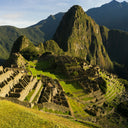
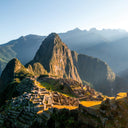
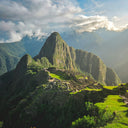


Machu Picchu sits at 2,430 meters above sea level, tucked between two peaks — Huayna Picchu and Machu Picchu mountain — in a bend of the Urubamba River that keeps it hidden from view until you're almost standing inside it. Built in the 15th century and never found by the Spanish, the citadel remained largely unknown to the outside world until 1911. Today it's one of the most visited archaeological sites on the planet, and also one of the most tightly regulated. In this guide, we walk through what we tell every traveler before they go: how to get there, when to visit, how the entry system actually works, and what to expect once you're inside.
Quick Facts
- Altitude: 2,430 m / 7,972 ft
- Distance from Cusco: ~112 km (by train + bus)
- Best season: May – September (dry season)
- Entry system: Timed-entry tickets with assigned circuits
- Recommended time on site: 2–3 hours
- Nearest town: Aguas Calientes (Machu Picchu Pueblo)
How Do We Get to Machu Picchu?
There's no road that reaches the citadel directly. Most travelers reach it by train from Cusco, Ollantaytambo, or Poroy to Aguas Calientes, followed by a 25-minute bus ride up the mountain. The alternative is trekking — the classic Inca Trail, the Salkantay route, or shorter alternative treks — all of which end at or near the site after several days on foot. For travelers short on time, the train is by far the most practical option: door to door, a day trip from Cusco is realistic, though an overnight stay in Aguas Calientes gives you a calmer, less rushed visit.
Understanding the Circuits
Since 2019, Machu Picchu has operated on a circuit system rather than free wandering. Each ticket is tied to a specific circuit and a specific entry time, and once you're inside, you generally can't backtrack or switch routes. There are several circuits, ranging from lower routes that focus on the classic postcard views to higher routes that include the Inca Bridge or additional viewpoints. The right circuit depends on what you want to see and how much walking you're prepared to do — some involve significant stairs and uneven terrain.
We handle circuit selection and ticket booking as part of our tours, but if you're planning independently, it's worth booking your entry ticket weeks (ideally months) in advance during high season, since availability by circuit sells out separately.
Skip the ticket logistics entirely
We handle circuit selection, timed entry, and transport — you focus on the experience.
Best Time to Visit
The dry season, May through September, offers the clearest skies and the classic postcard views. It's also the busiest period, especially June through August. The shoulder months — April and October — often provide a good balance: fewer crowds, still-manageable weather. The wet season (November–March) brings a real chance of rain and cloud cover, though mornings can still be clear, and the site is dramatically less crowded.
What to Expect Once You're Inside
The first view of the citadel — usually from near the Guardhouse, looking down over the terraces toward Huayna Picchu — is the moment most travelers remember most. From there, the circuit guides you through agricultural terraces, the urban sector, and key structures like the Temple of the Sun and the Intihuatana stone. A knowledgeable guide makes a real difference here: much of what makes Machu Picchu remarkable isn't visible at a glance — it's in the astronomical alignment of the structures, the engineering of the water channels, and the way the site was integrated into the surrounding landscape rather than imposed on it.
Machu Picchu Mountain vs. Huayna Picchu
Both peaks can be climbed with a separate add-on ticket, purchased alongside your entry. Huayna Picchu is steeper, more exposed, and books out faster — it's the iconic peak visible in most photos of the site. Machu Picchu Mountain is a longer but less technical climb, with arguably even better panoramic views since you're looking back at the citadel itself. Neither is included in a standard entry ticket, and both require booking well in advance.
Planning a multi-day trip to Machu Picchu?
We can build an itinerary that includes the Sacred Valley, your preferred circuit, and transport.
Frequently Asked Questions
Do I need a guide to enter Machu Picchu?
Yes — current regulations require all visitors to enter with a licensed guide, either as part of a group or a private arrangement.
Can I visit Machu Picchu as a day trip from Cusco?
Yes, it's possible, though it makes for a long day — typically leaving before dawn and returning late at night. An overnight stay in Aguas Calientes allows for a more relaxed pace.
How far in advance should I book tickets?
For high season (May–September), we recommend booking at least 1–2 months ahead, especially if you want Huayna Picchu or a specific circuit. Low season allows more flexibility.
Is Machu Picchu difficult to walk around?
Most circuits involve uneven stone paths, stairs, and some elevation change within the site itself. It's manageable for most fitness levels, though comfortable footwear matters more than most travelers expect.
Machu Picchu rewards a bit of planning. Understanding the circuit system, booking ahead, and choosing the right season turns what could be a rushed, confusing day into the kind of visit that actually matches what you came for.


